
Portable vs. Hard-Shell Hyperbaric Chambers: How to Choose for Your Commercial Facility

Choosing a hyperbaric chamber for a commercial facility involves more than comparing product dimensions, operating pressure, or purchase price. Whether you are opening a wellness center, expanding a sports recovery studio, introducing new equipment to a hotel spa, or evaluating products for distribution, the type of chamber you choose can affect your installation requirements, available space, daily operations, and long-term equipment planning.
Two common options are portable hyperbaric chambers and hard-shell hyperbaric chambers. Both are designed to create a controlled pressurized environment, but their construction, available configurations, accessibility, and installation requirements can differ considerably. Neither category is automatically the better choice. A suitable chamber must match the practical conditions of your facility as well as your intended operating requirements.
This guide compares portable and hard-shell hyperbaric chambers from a commercial buyer’s perspective, covering structural differences, site preparation, user capacity, operating systems, and overall purchasing considerations. It also explains how to evaluate your options before requesting a quotation.
1. Understanding the Structural Differences
The most visible difference between portable and hard-shell hyperbaric chambers is their construction. Portable chambers typically use flexible, pressure-resistant enclosures, while hard-shell chambers rely on rigid structural bodies made from materials such as carbon steel or stainless steel. These different approaches influence more than appearance: they affect equipment handling, access design, interior layout, installation arrangements, and future servicing considerations.
Portable Hyperbaric Chambers
Portable hyperbaric chambers are generally built around flexible enclosures connected to supporting pressure and air-supply systems. Their construction can make them more adaptable to facilities where equipment placement, access through existing doorways, or future relocation are important considerations. Depending on the model, the interior may accommodate lying, seated, or reclining positions.
The term portable, however, should not be confused with equipment that can be moved freely during operation or installed without preparation. Even a relatively compact chamber requires suitable electrical arrangements, adequate surrounding clearance, supporting equipment, and compliance with the manufacturer’s operating and safety instructions. Buyers should evaluate the complete installed system rather than relying only on the dimensions of the flexible enclosure.
SENOXY’s portable hyperbaric chamber range includes different interior configurations, such as the P140 lying model, P150 sitting model, P160 seated or reclining model, and P200 lying model. These options allow buyers to compare equipment arrangements according to their space and intended use, subject to confirmed model specifications.
Hard-Shell Hyperbaric Chambers
Hard-shell chambers use rigid structural enclosures, with construction methods and materials varying according to the model. Their designs can accommodate different entry arrangements, interior layouts, integrated equipment, and single-person or multi-person capacities. These characteristics make them relevant to facilities planning a dedicated installation or requiring configurations that may not be available in a particular portable model.
A rigid structure does not automatically mean that every hard-shell chamber operates at a higher pressure or offers greater capacity than every portable alternative. Pressure ratings, internal dimensions, control systems, and available accessories are model-specific. The main distinction is the structural approach and the practical requirements associated with transporting, positioning, and operating the equipment.
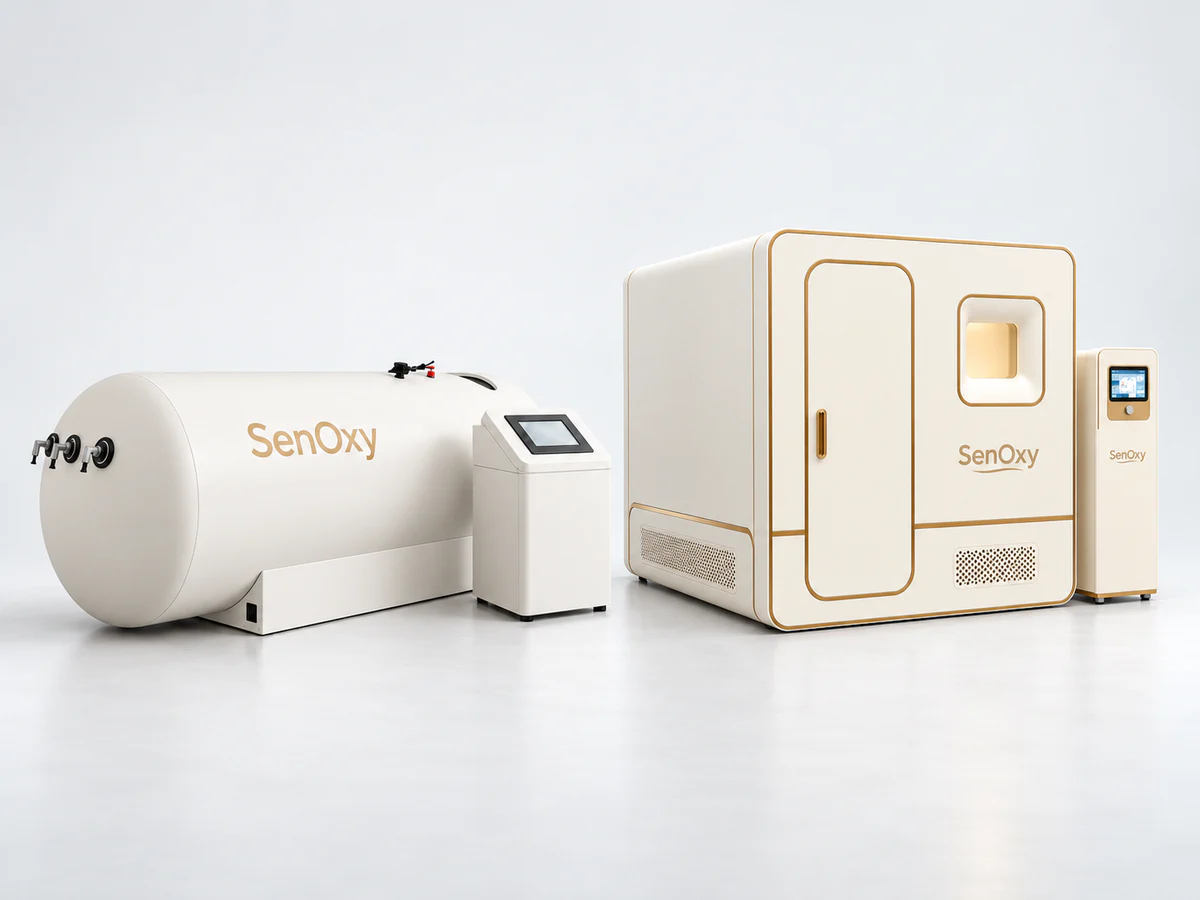
For commercial buyers evaluating rigid chamber designs, SENOXY’s hard-shell hyperbaric chamber range includes compact single-person configurations as well as larger multi-person models.
Quick Comparison: Portable vs. Hard-Shell Chambers
| Comparison Factor | Portable Chambers | Hard-Shell Chambers |
|---|---|---|
| Construction | Flexible, pressure-resistant enclosure | Rigid structural enclosure, depending on model |
| Installation planning | May offer more flexibility in existing spaces | May require more detailed access and handling arrangements |
| Capacity | Primarily individual configurations in SENOXY’s range | Single-person and multi-person configurations |
| Interior arrangement | Lying, seated, or reclining options | Different interior layouts depending on model |
| Relocation | May be easier to reposition when properly prepared | Generally involves more substantial handling arrangements |
| Operating pressure | Depends on the specific model | Depends on the specific model |
| Typical consideration | Space flexibility and individual configurations | Dedicated installations and broader capacity options |
These are general comparisons rather than universal technical rules. Final equipment selection should always be based on confirmed specifications, intended use, and site requirements.
2. Space Planning and Installation Requirements
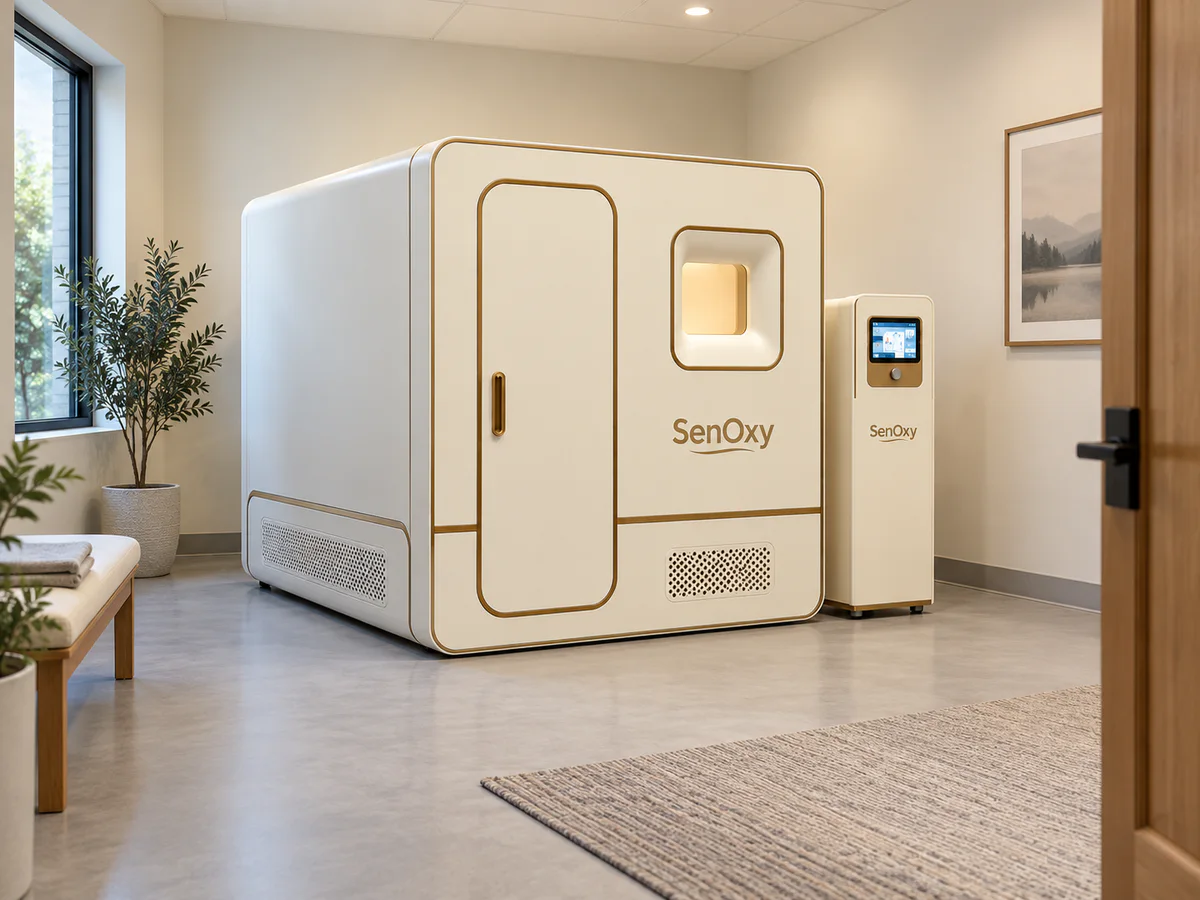
One of the most important questions in commercial equipment purchasing is whether the chamber can be delivered, positioned, installed, and operated safely within the available space. Buyers sometimes focus on the external dimensions of the chamber without accounting for entrance widths, surrounding clearance, auxiliary equipment, electrical access, ventilation, or space required for inspection and servicing.
Portable chambers may provide greater flexibility in certain existing rooms, especially where a large rigid enclosure would be difficult to transport through the building. However, the full operating arrangement can occupy more space than the chamber itself. Pumps, control components, hoses, electrical connections, and operator access areas must also be considered. A room that appears large enough for the enclosure may still be unsuitable once the supporting equipment and required clearances are included.
Hard-shell chambers often require more detailed delivery planning. Depending on the model, buyers may need to review corridor dimensions, doorway widths, freight elevator capacity, floor loading, unloading conditions, and the route from the delivery point to the final installation location. Larger multi-person chambers introduce additional logistical considerations because of their physical dimensions and supporting systems.
An important distinction is the difference between the chamber’s installed dimensions and its transport dimensions. Packaging, protective frames, pallets, or other shipping arrangements may affect how the equipment can enter a building. A delivery route that appears suitable for the finished chamber may not accommodate the equipment in its shipping condition. Buyers should therefore confirm how the selected model will be packed, unloaded, and moved into position before finalizing an order.
What Should Be Checked Before Installation?
For both portable and hard-shell chambers, site preparation should begin before production or shipment arrangements are finalized. A preliminary site review should consider:
- Room dimensions: Available floor area, ceiling height, equipment placement, and surrounding working space.
- Access route: Doorways, corridors, elevators, stairways, turning space, and the final delivery route.
- Floor and building conditions: Equipment weight, loading requirements, and the suitability of the proposed location.
- Utilities and environment: Electrical supply, ventilation, auxiliary equipment placement, and other model-specific requirements.
- Operation and servicing: Operator access, routine inspection space, cleaning arrangements, and emergency procedures.
Providing room measurements, access dimensions, photographs, and information about available utilities helps the supplier identify potential installation conflicts before they become expensive problems. The applicable building, fire, electrical, pressure-equipment, and other regulatory requirements should also be reviewed by appropriately qualified professionals.
SENOXY provides further information about project preparation through its Installation & Support page, including how installation requirements and technical coordination can be discussed before delivery.
3. User Comfort, Accessibility, and Capacity
The experience of using a hyperbaric chamber is influenced by several factors beyond its construction type. Entry design, interior space, body position, visibility, communication arrangements, lighting, and ease of access can all affect how the equipment fits into a commercial service environment.
Portable chambers are available in different configurations. A lying chamber may suit a facility planning individual sessions in a reclined position, while a sitting or seated configuration may better match a particular room layout or user preference. These differences should be evaluated using actual interior dimensions, entry arrangements, and the requirements of the intended users rather than assuming that every portable chamber provides the same experience.
Hard-shell chambers offer another range of possibilities, from compact single-person units to larger chambers designed to accommodate multiple occupants. Some facilities may prefer individual chambers for private, appointment-based services, while others may consider larger configurations when evaluating their available space, staffing arrangements, and intended operating procedures.
Capacity should not be treated as a simple calculation of how many people can fit inside the equipment. Buyers also need to consider how users enter and exit the chamber, how sessions are supervised, what communication arrangements are available, and which procedures apply during normal operation or an emergency.
A multi-person chamber may accommodate more occupants during a single session, but this does not automatically mean it provides greater operational efficiency. Staffing requirements, preparation time, cleaning procedures, session scheduling, and the facility’s actual customer demand all influence how effectively a larger chamber can be used.
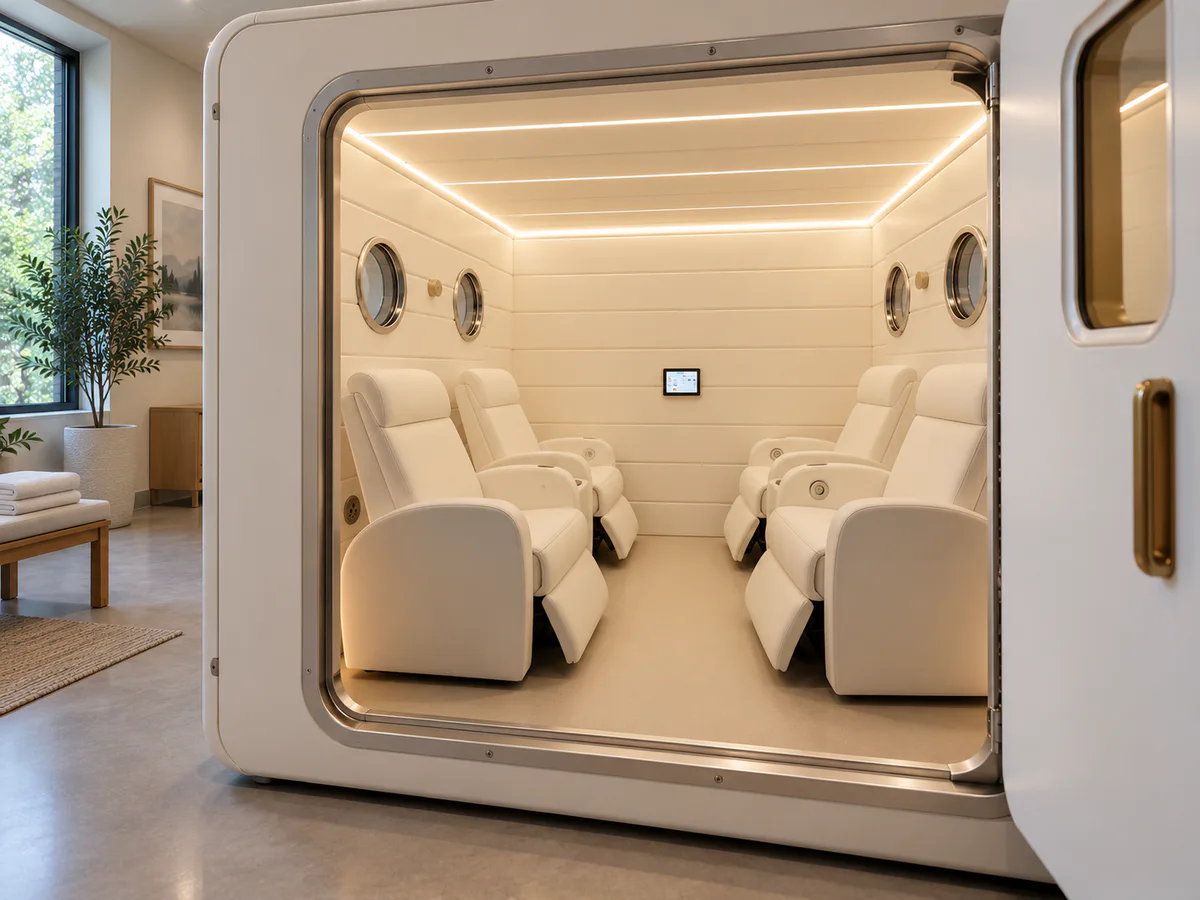
For example, a recovery studio operating primarily through individual appointments may find that a single-person configuration aligns more naturally with its booking schedule. A facility considering group sessions may have different capacity requirements, but it should also evaluate supervision, site preparation, and the operating procedures associated with larger equipment.
In practice, the best configuration is one that supports a realistic workflow. Interior comfort, accessibility, operational capacity, and available staffing should be evaluated together rather than as separate product features.
4. Operating Pressure, Controls, and Equipment Configuration
Operating pressure is frequently highlighted in hyperbaric chamber specifications, usually expressed in atmospheres absolute (ATA). ATA describes absolute pressure relative to a standard atmosphere. For reference, 1.0 ATA represents approximately normal atmospheric pressure at sea level, while 1.5 ATA represents an absolute pressure approximately 1.5 times that reference level.
Understanding this measurement is useful, but the maximum rated operating pressure should not determine a commercial purchasing decision on its own. Buyers also need to consider the intended application, system configuration, pressure management, air supply, monitoring arrangements, operating procedures, and relevant regulatory requirements.
Portable and hard-shell chambers can both include models with different rated operating pressures. A chamber’s pressure capability should therefore never be inferred solely from whether its enclosure is flexible or rigid. Instead, buyers should request the confirmed specifications of the exact model under consideration and review how the equipment is intended to operate as a complete system.
For a commercial facility, several technical questions deserve particular attention. These include how operators monitor equipment conditions, how pressure changes are controlled, what routine checks are required, what communication arrangements are available, and which procedures must be followed before, during, and after operation. The supporting systems and operating instructions are as important to review as the chamber enclosure itself.
Buyers should also distinguish between chamber pressure and oxygen delivery arrangements. A pressure rating does not, by itself, establish the type of breathing gas supplied, the oxygen concentration delivered to a user, or the equipment’s suitability for a particular medical application. These are separate technical and regulatory considerations that must be verified for the intended use.
Requirements for medical applications, operator qualifications, oxygen systems, and regulatory authorization differ between jurisdictions. Equipment intended for general wellness use should not be assumed to meet requirements for clinical treatment simply because it operates under pressure.
SENOXY works with selected manufacturing partners to coordinate confirmed chamber configurations and relevant technical information. Buyers can learn more about the company’s approach to structural design, system integration, and manufacturing coordination on its Manufacturing page.
5. Purchase Budget and Long-Term Operation
The purchase price of a hyperbaric chamber is only one part of the investment required to introduce equipment into a commercial facility. A meaningful comparison should consider the complete project cost, including the selected chamber configuration, supporting systems, international freight, destination handling, installation arrangements, staff preparation, maintenance, and potential future servicing.
Portable chambers may be attractive to buyers who want to evaluate a smaller-scale installation or work within certain space constraints. Nevertheless, total project costs depend on the model, configuration, delivery destination, and supporting equipment required. It would be misleading to assume that every portable solution is inexpensive or that every hard-shell alternative requires substantially greater expenditure without comparing actual quotations.
Hard-shell installations can involve additional logistical considerations, particularly for larger or multi-person equipment. Transportation arrangements, unloading equipment, site access, structural requirements, and installation coordination may influence the overall budget. These costs should be reviewed alongside the purchase price rather than treated as unexpected expenses after an order has been placed.
Long-term ownership introduces another set of questions. Buyers should clarify routine inspection procedures, cleaning requirements, replacement parts, technical documentation, warranty coverage, and available technical assistance. Commercial operators should also consider how equipment downtime could affect appointment schedules and whether their staff have the appropriate training and procedures for safe operation.
Looking Beyond the Initial Quotation
When comparing offers from different suppliers, buyers should review exactly what is included in each proposal. A quotation may cover the main chamber and selected supporting systems, while other items or services may be quoted separately. Freight, unloading, installation assistance, optional accessories, and local service arrangements should be clarified before comparing total project costs.
For international orders, delivery responsibilities also matter. Freight arrangements, customs procedures, destination handling, and applicable costs depend on the agreed commercial terms and the requirements of the destination. These conditions should be documented for the specific order rather than assumed from a general product price.
A lower initial quotation does not necessarily represent a lower total ownership cost if important components, logistics, or support arrangements have been excluded. A more useful purchasing comparison looks at the complete proposed configuration, the scope of supply, and the practical responsibilities associated with delivery and operation.
6. How to Choose the Right Chamber for Your Facility
The most effective purchasing process begins with your facility’s requirements rather than a particular model. Identifying the intended operating environment, available space, user capacity, and procurement constraints helps narrow the range of suitable configurations before a detailed technical comparison begins.
For a smaller wellness studio or independent recovery facility, the starting point may be available room dimensions, preferred interior position, and the practicality of installing equipment without major building modifications. A portable chamber may be worth evaluating in this situation, although the final decision still depends on the model’s operating requirements and suitability for the intended use.
For a hotel spa, established wellness center, or larger commercial facility, permanent installation planning, interior configuration, accessibility, staffing, and overall service design may carry greater weight. Hard-shell options can be considered alongside portable alternatives rather than selected automatically on the basis of facility size.
Equipment distributors have additional concerns. Product documentation, configuration consistency, destination-market requirements, packaging, spare parts arrangements, and supplier communication can be as important as visible equipment features. A product suitable for one market or installation may require a different evaluation elsewhere.
A Practical Decision Guide
The following table identifies useful starting points based on common commercial requirements.
| Your Main Requirement | Recommended Starting Point |
|---|---|
| Limited space or difficult building access | Evaluate portable models first |
| Individual lying or seated sessions | Compare suitable single-person configurations in both categories |
| Two or more occupants in one chamber | Review multi-person hard-shell models |
| Dedicated, permanent equipment area | Compare hard-shell and suitable portable options |
| Potential equipment relocation | Review portable models and their relocation procedures |
| Specific operating pressure requirements | Compare verified specifications for individual models |
| International distribution or resale | Prioritize documentation, configuration consistency, and destination-market requirements |
This table is intended to narrow the initial evaluation rather than replace a model-specific technical review. The appropriate chamber depends on the complete combination of site conditions, operating needs, and applicable requirements.
What SENOXY Reviews Before Recommending a Chamber
Choosing a suitable chamber is not simply a matter of matching a customer with an available model. For international commercial projects, the intended application, site conditions, equipment configuration, and delivery arrangements all influence the purchasing decision.
At SENOXY, we work with selected manufacturing partners to help buyers review these considerations before an order is finalized. The process begins with understanding the facility and its intended equipment requirements, then clarifying relevant specifications, installation conditions, available configurations, and destination-related considerations.
For example, a buyer with an existing wellness space may need to confirm doorway access, auxiliary equipment placement, and the suitability of a lying or seated chamber. A customer planning a larger multi-person installation may require a more detailed discussion of overall dimensions, delivery access, supporting systems, and site preparation. An equipment distributor may place greater emphasis on product documentation, configuration consistency, and the requirements of the intended market.
These discussions help identify which details should be confirmed with manufacturing partners and which site or commercial arrangements require additional planning. The goal is to make the proposed equipment configuration and project responsibilities clearer before production and shipment decisions are made.
What to Prepare Before Requesting a Quote
To make the initial discussion more productive, buyers should provide the following information where available:
- Facility type and location: Describe your business, intended installation environment, and destination country.
- Available space: Share room dimensions, access measurements, photographs, and any known site restrictions.
- Preferred configuration: Indicate whether you are considering a lying, seated, single-person, or multi-person chamber.
- Technical requirements: Identify relevant operating specifications, utilities, documentation needs, and applicable local requirements.
- Project arrangements: Clarify the expected quantity, delivery preferences, installation considerations, and approximate purchasing schedule.
You do not need to have every specification finalized before contacting a supplier. An initial discussion can help identify which questions require further technical confirmation and which product configurations deserve closer examination.
Making a More Informed Decision
Portable and hard-shell hyperbaric chambers serve different equipment-planning needs, and both categories include meaningful differences between individual models. Portable designs can offer flexibility in certain environments, while hard-shell designs provide a range of rigid structural and interior configurations for different installation and capacity requirements.
The better choice is not necessarily the chamber with the highest pressure rating, the largest interior, or the longest list of features. It is the equipment that can be appropriately specified, installed, operated, and supported within the practical conditions of your project.
At SENOXY, we help international commercial buyers explore chamber configurations, clarify technical requirements, and coordinate relevant project information with our manufacturing partners. Whether you are evaluating a portable model for an independent studio or planning a larger hard-shell installation, a well-informed decision begins with understanding your facility.
Planning a Hyperbaric Chamber Installation?
Share your space requirements, preferred chamber configuration, and project details with the SENOXY team. We can help you explore suitable options and clarify the information needed for a project-specific quotation.
Disclaimer: This guide provides general equipment-selection information for commercial buyers. It is not medical advice or a substitute for professional engineering, safety, or regulatory assessment. Equipment suitability, operating procedures, and regulatory requirements must be verified for the intended use and destination market.